
Kerala Real Estate in 2026: What Is Driving Property Growth in Trivandrum
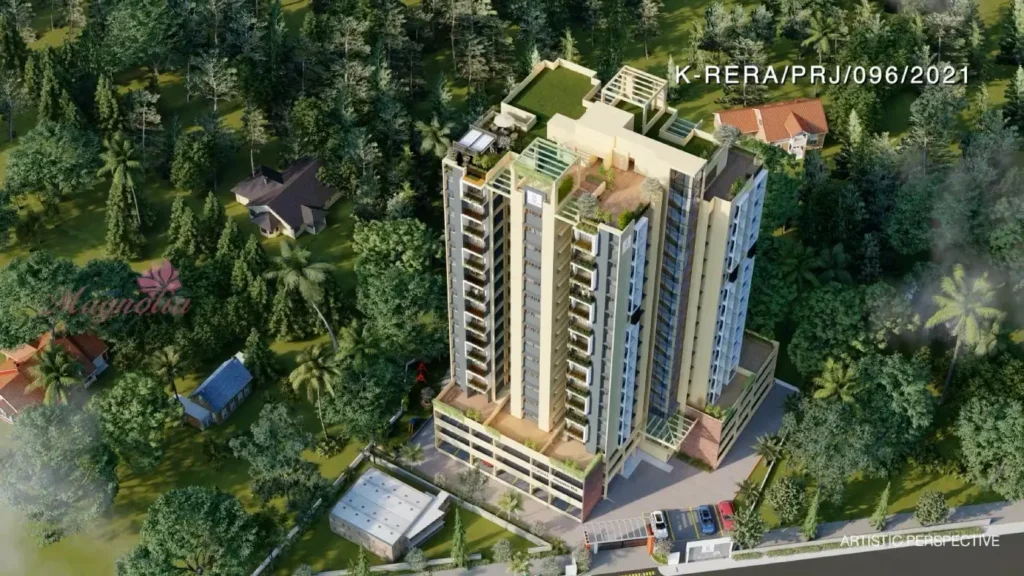
Kerala’s property market has undergone more change in the last three years than in the decade before it. The combination of operational infrastructure, a maturing regulatory framework, and a new generation of demand drivers has repositioned Trivandrum specifically as one of South India’s most structurally sound residential investment destinations. Understanding what is behind this shift and what it means for buyers and investors making decisions now is the starting point for any serious property evaluation in 2026.
The Five Forces Reshaping Kerala’s Residential Property Market
Five distinct drivers are working simultaneously in Trivandrum’s residential market. None of them are speculative. All five are active in 2026.
Urbanisation with a quality filter. The professionals relocating to Trivandrum in 2026 are not arriving for generic employment. They are arriving for specific, high-value roles: IT engineering positions at the TCS Digital Hub and the companies scaling within Technocity’s campus, aerospace and space-tech roles at the Kerala Space Park and KSPACE, maritime and logistics management roles tied to Vizhinjam’s operations, and research positions at Digital University Kerala. This is not a quantity story. It is a quality story, high-income households with clear housing requirements and the financial capacity to meet them.
NRI investment with structural staying power. The Gulf-to-Kerala property investment channel has been active for decades, but the nature of NRI investment in Trivandrum has evolved. Where earlier investment was primarily sentimental, buying a home for parents, planning a vague future return, the NRI buyer in 2026 is more frequently making a calculated investment in a city whose infrastructure has demonstrably improved and whose rental yield is backed by a verifiable tenant base. Currency advantages in the Dirham and Dollar against the Rupee remain meaningful. Digital property registration processes and managed rental services through developer after-sales divisions have reduced the management friction that previously deterred offshore buyers.
Vizhinjam International Seaport: operational and already reshaping demand. The seaport that Trivandrum’s property market was told to price in for years is no longer a future event. Vizhinjam received its first commercial container vessels in late 2024 and is actively handling transshipment traffic in 2026. The businesses that follow a major port, shipping agencies, freight logistics companies, port operations contractors, maritime services, are establishing themselves in Trivandrum’s southern corridor, generating professional migration that is already visible in residential inquiry patterns for Pallippuram, Kazhakkoottam, and adjacent areas.
Technocity: a live integrated township. Technopark Phase 4’s transformation into Technocity, a four-hundred-acre integrated IT and innovation campus at Pallippuram, represents the single largest new demand driver Trivandrum’s residential market has seen. TCS’s campus is operational. Kerala Space Park is onboarded with over fifty aerospace companies. Digital University Kerala is active. The Unity Mall is under construction within the campus. The residential demand this ecosystem generates is structural, not cyclical.
K-RERA maturity. Kerala’s Real Estate Regulatory Authority has moved from a new institution managing a backlog of disputes to an established regulatory framework that developers, buyers, and lenders now plan around. In 2026, K-RERA registration is not merely a compliance step, it is a credibility signal that experienced buyers use to screen developers at the first stage of evaluation. The public project registry at rera.kerala.gov.in allows any buyer to verify timelines, specification commitments, and completion status independently, without relying on the developer’s own marketing.
Why Trivandrum Leads Kerala’s Property Market in 2026
Within Kerala, multiple cities compete for residential investment attention. Kochi has the larger transaction volumes and the higher headline prices. Calicut has improved its infrastructure narrative. But Trivandrum’s specific combination, government employment stability as a base, IT sector growth as a driver, NRI capital as fuel, a seaport as a multiplier, and a space-tech ecosystem as a differentiator, is unusual enough that informed investors are recognising it as a distinct category rather than a smaller version of Kochi’s market.
The central residential corridors of Trivandrum, Sasthamangalam, Maruthankuzhi, Kowdiar, Pattom, Jagathy, offer something Kochi’s premium zones do not: genuine scarcity. The land in these neighbourhoods has been developed for four to six decades. New residential supply requires demolition and redevelopment, which is slow and expensive. When a premium project comes to market in one of these corridors, it is filling a gap that will not be filled again for years. That supply constraint drives both capital appreciation and rental yield consistency.
Vizhinjam and Technocity: Infrastructure That Has Changed the Investment Equation
The two infrastructure stories that have most directly affected Trivandrum residential values in the last two years are Vizhinjam and Technocity, and their effects are not identical.
Vizhinjam’s impact is concentrated in the southern corridor, Pallippuram, the bypass-adjacent belt, and locations with reasonable access to the port’s operational area. The demand here is from a new professional segment: maritime operations managers, shipping agency executives, and port infrastructure contractors who require housing near their workplace. This is early-stage demand in a corridor that was previously residential in character but not premium, and it carries the appreciation potential that comes with being ahead of full professional migration.
Technocity’s impact is more immediate and more visible. The Pallippuram address is now, in 2026, a genuine live-work corridor for IT and technology professionals. Cordial Vivana, located within the Technocity campus, is the most direct residential expression of this: an apartment project positioned for the exact professional cohort whose employer is within walking distance of the building.
Regulatory Maturity: How K-RERA Transformed Kerala Real Estate
The transformation K-RERA has driven in Kerala’s residential market is most visible in what it eliminated rather than what it created. Pre-RERA, buyer complaints about delayed possession, specification deviations, and undisclosed encumbrances were common and largely without recourse. Post-RERA, these remain possible but are now subject to regulatory action, financial penalty, and public record.
For buyers in 2026, the practical implication is that K-RERA registration has become a first-pass screening criterion, not a secondary consideration. Bank approval of a project is the complementary check: SBI, HDFC, Axis Bank, ICICI, Federal Bank, and Canara Bank each conduct independent legal and compliance reviews of projects before approving them for home loan disbursement. A project that carries all of these approvals has been reviewed by six separate legal teams. That verification cannot be replicated by an individual buyer’s due diligence, however thorough.
Choosing the Right Developer in Kerala’s 2026 Market
The maturity of Kerala’s regulatory environment has not eliminated developer quality differences, it has made them more legible. K-RERA’s public project registry shows completion status against committed timelines. Buyer reviews are more accessible than at any previous point. And the developer’s track record across completed projects, which is the single most reliable predictor of future delivery, can now be cross-referenced against RERA data rather than relying on developer-supplied references.
In Trivandrum, Cordial Developers’ 45-year track record across residential and institutional construction, 133 completed projects, zero insolvency incidents, delivery across Jagathy, Pattom, Kesavadasapuram, Nanthencode, and Sasthamangalam, represents exactly the kind of verifiable history that K-RERA’s transparency enables buyers to assess properly. Both active projects, Vajram at Maruthankuzhi and Vivana at Technocity, carry full K-RERA registration and multi-bank approval.
Kerala’s real estate market in 2026 rewards buyers who understand the difference between a developer’s marketing and their record. The infrastructure is now in place. The regulatory framework is now functional. The demand drivers are now structural rather than speculative. The decision, at this point, is primarily about which project in which corridor and which developer’s history gives you the confidence to commit.
Recent Posts

The Right Address Never Waits for
Most conversations about apartment investment in Trivandrum default...
Read More
Ready to Find Your Home?
Book a Visit to Cordial Developers
Our advisors will arrange a personalised site tour at your convenience and guide you through pricing, floor plans, and payment options.

Luxury flats in Trivandrum
Member of :


© 2026 Cordial Developers Pvt. Ltd. All Rights Reserved. · RERA Registered.
Crafted by Medowa Global