
Living with Nature: Wellness & Biophilic Interior Designs
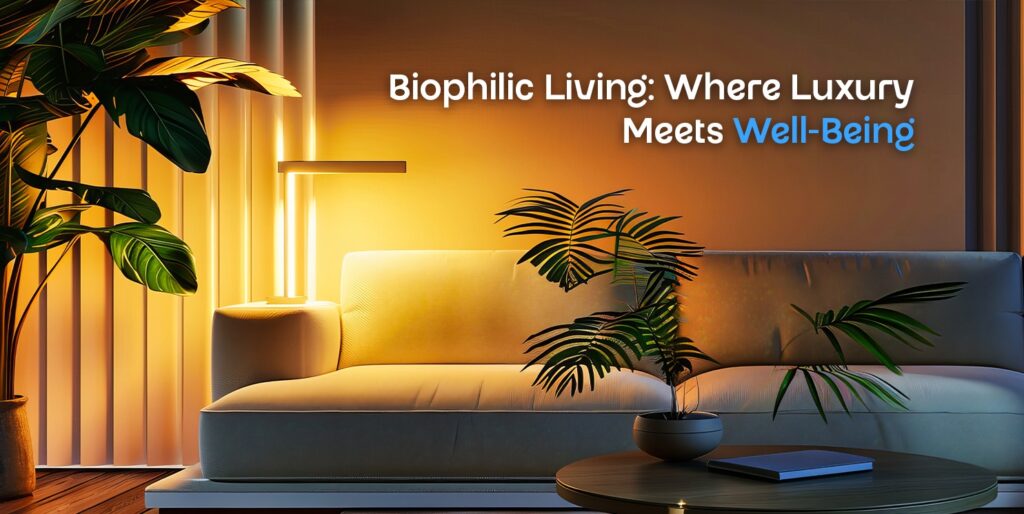
The idea of luxury in Indian homes has been quietly but decisively transformed. For decades, premium living was measured in square footage, imported fixtures, and brand-name fittings. Today, a different aspiration defines the high-end home one rooted not in material display but in restoration. The home is increasingly being asked to heal.
At the centre of this shift is Biophilic Design: a philosophy that integrates natural elements, materials, and spatial experiences into the built environment to fulfil the deeply human need for connection with nature. As urban stress intensifies driven by air pollution, rising temperatures, noise, and the pressures of contemporary life, the demand for interiors that actively support health and calm has reached a tipping point. Biophilic and wellness-centric design is no longer a niche indulgence. It is becoming the defining grammar of thoughtful interior design across India.
7 Defining Trends in Wellness & Biophilic Interior Design
1. The Three Pillars: A Framework for Natural Living
Every coherent biophilic interior rests on three foundations:
- Nature in the Space — direct presence of plants, water, and greenery within the home
- Natural Analogues — organic materials such as reclaimed wood, stone, bamboo, and clay that evoke the textures of the natural world
- Nature of the Space — spatial configurations that create a sense of openness (prospect) and intimate, protected corners (refuge), mimicking the landscape intelligence our bodies evolved in
2. Circadian and Human-Centric Lighting
Lighting in premium residences is no longer simply about visibility, it has become a tool for biological regulation. Circadian lighting systems mimic the full arc of natural daylight, from crisp cool morning tones that sharpen alertness to warm amber evening hues that encourage the body to wind down. For homeowners managing hybrid work and family life from the same space, this shift in light quality through the day can meaningfully improve sleep, focus, and daily rhythm, without requiring any change in behaviour.
3. Air and Water Purification as Core Infrastructure
Advanced air filtration systems that address fine particulate matter and volatile organic compounds (VOCs) are increasingly built into the apartment’s infrastructure rather than added as appliances. Indoor plants Areca Palm, Peace Lily, Snake Plant provide a biological complement, absorbing toxins and balancing indoor humidity. Whole-house water purification systems address hard water, chlorine, and heavy metals, with documented benefits for skin health and the longevity of premium fixtures. Wellness infrastructure is shifting from optional feature to non-negotiable standard in luxury design.
4. Low-VOC and Bio-Based Wall Finishes
Standard paints are among the largest contributors to indoor air pollution. The new standard in premium Indian interiors involves zero-VOC, organic, and functionally active finishes formulations built on bamboo charcoal, plant-based ingredients, and active carbon that absorb existing pollutants rather than merely stopping their own emissions. In wellness-centric interiors, the walls themselves become part of the health equation.
5. Acoustic Comfort Through Natural Materials
Noise is a physiological stressor, and design has begun addressing it with the same rigour applied to air and light. Mycelium panels made from fungal roots and recycled textile residues offer a fully circular acoustic solution. Hemp and wood wool boards regulate humidity and temperature while absorbing sound. Natural fibre rugs, cane furniture, and cork wall treatments layer tactile warmth with acoustic softness. These materials align naturally with India’s existing craft traditions, making them culturally resonant as well as functionally effective.
6. Biophilic Zoning Within the Home
Rather than scattering plants across a home without intention, biophilic zoning creates dedicated wellness environments within specific rooms or corners, a yoga deck with morning light, a reading nook overlooking greenery, a balcony transformed into a sky garden. These zones support distinct states of being: focus, recovery, reflection, or social energy. In Indian homes shared across generations, this framework helps interiors serve the full spectrum of daily life, not just look beautiful in a photograph.
7. The Economic Case for Wellness Design
Properties with integrated wellness features consistently outperform conventional luxury offerings in resale value, sales velocity, and long-term operating costs through energy and water efficiency. For buyers and developers alike, the return on investment from wellness design is documented and growing and green building certifications from bodies like the IGBC have become meaningful signals of long-term value, not just environmental conscience.
Kerala: Where Biophilic Design Has Always Lived
Kerala occupies a singular position in this story — not as a new adopter of biophilic design, but as a civilisation that has practised it for centuries. The traditional Nalukettu, centred around an open courtyard called the Nadumuttam, is one of the world’s most refined examples of passive biophilic architecture. The courtyard was not decorative it was the ventilation engine of the entire home, drawing in natural light and fresh air to every room. Materials were drawn entirely from the local ecology: laterite stone, teak, clay tiles.
The principles of Thachu Sastra (the traditional science of carpentry) and Vastu Shastra guided spatial orientation relative to natural forces, ensuring every element served the well-being of its occupants. This was biophilic design not as a modern Western import, but as Kerala’s own living inheritance.
Contemporary designers in Thiruvananthapuram, Kochi, and Thrissur are carrying this intelligence into vertical urbanism through double-height atriums that stand in for the central courtyard, landscaped sky terraces that recreate the Nadumuttam in elevation, perforated brick veils that allow air and light to flow while maintaining privacy, and native plant species Areca Palm, Rubber Plant, Money Plant selected to thrive in Kerala’s humidity without artificial climate control.
Why It Matters and How to Bring It Home
Research consistently shows that environments with natural elements reduce cortisol levels, lower heart rate, and support stronger cognitive function. The practical steps do not require renovation. Position your work or reading space where it receives the most natural light. Replace synthetic flooring progressively with stone, wood, or terracotta. Introduce low-maintenance plants in the bedroom and living areas. Choose zero-VOC paints for any walls being refreshed. Use natural fibre rugs and fabric panels to soften acoustic harshness. Allow natural ventilation wherever the building envelope permits.
The cumulative effect is a home that supports rather than depletes the people within it.
Recent Developments: 2025–2026
The concept of sensitive homes environments that respond dynamically to occupants’ biological needs through AI-enabled systems managing air quality, light cycles, and ambient conditions has emerged as the next frontier beyond conventional smart-home automation. Kerala-based design commentary has specifically noted the rise of circadian interior design as a distinct discipline. Bio-based acoustic solutions using mycelium and recycled textiles are gaining ground in high-end Indian interiors. And the idea of regenerative design homes built to actively restore their environment through solar energy, rainwater harvesting, and greywater recycling is moving from architectural aspiration to deliverable reality in premium residential developments.
Conclusion
The measure of a well-designed home has permanently shifted. It is no longer what a space displays, but what it does, how it supports sleep, thought, calm, and connection to the living world. This is the quiet revolution biophilic design represents: a return to the understanding that the home must first serve the human being within it.
Cordial Vajram, the latest premium residential development by Cordial Developers at Maruthankuzhi near Sasthamangalam, Thiruvananthapuram, reflects this understanding with care. The project’s 2 and 3 BHK apartments are designed around natural light, spatial openness, and liveability the foundational grammar of biophilic living. Wellness features including a yoga and meditation deck, walking track, an elders’ corner with acupuncture walkway, and landscaped open spaces bring residents into regular, meaningful contact with nature and open air. And through their customised interior design support, Cordial allows each homeowner to personalise their apartment around their own wellness priorities, aesthetic preferences, and way of living guided by four decades of experience in Trivandrum’s residential landscape. For those seeking a home that is as restorative as it is refined, it is a thoughtful answer.
Recent Posts

Solar, EV Charging, and Energy Management
Cordial Vivana is currently under construction at Pallippuram,...
Read More
Building-Wide Internet Infrastructure in Trivandrum Apartments:
When purchasing an apartment, buyers usually compare location,...
Read MoreReady to Find Your Home?
Book a Visit to Cordial Developers
Our advisors will arrange a personalised site tour at your convenience and guide you through pricing, floor plans, and payment options.

Luxury flats in Trivandrum
Member of :


© 2026 Cordial Developers Pvt. Ltd. All Rights Reserved. · RERA Registered.
Crafted by Medowa Global